COMMODITY / COUTURE
Eight cocoa farmers in Ghana, in their own words.
Of every £1 spent on chocolate, about 6p reaches the farmer who grew the cocoa.
These are the people behind that 6p. They farm in Adumadum, Eastern Region, Ghana. We spent a day with them at harvest, at the breaking of the pods, at the fermenting heaps and the drying mats.
ADUMADUM · EASTERN REGION · GHANA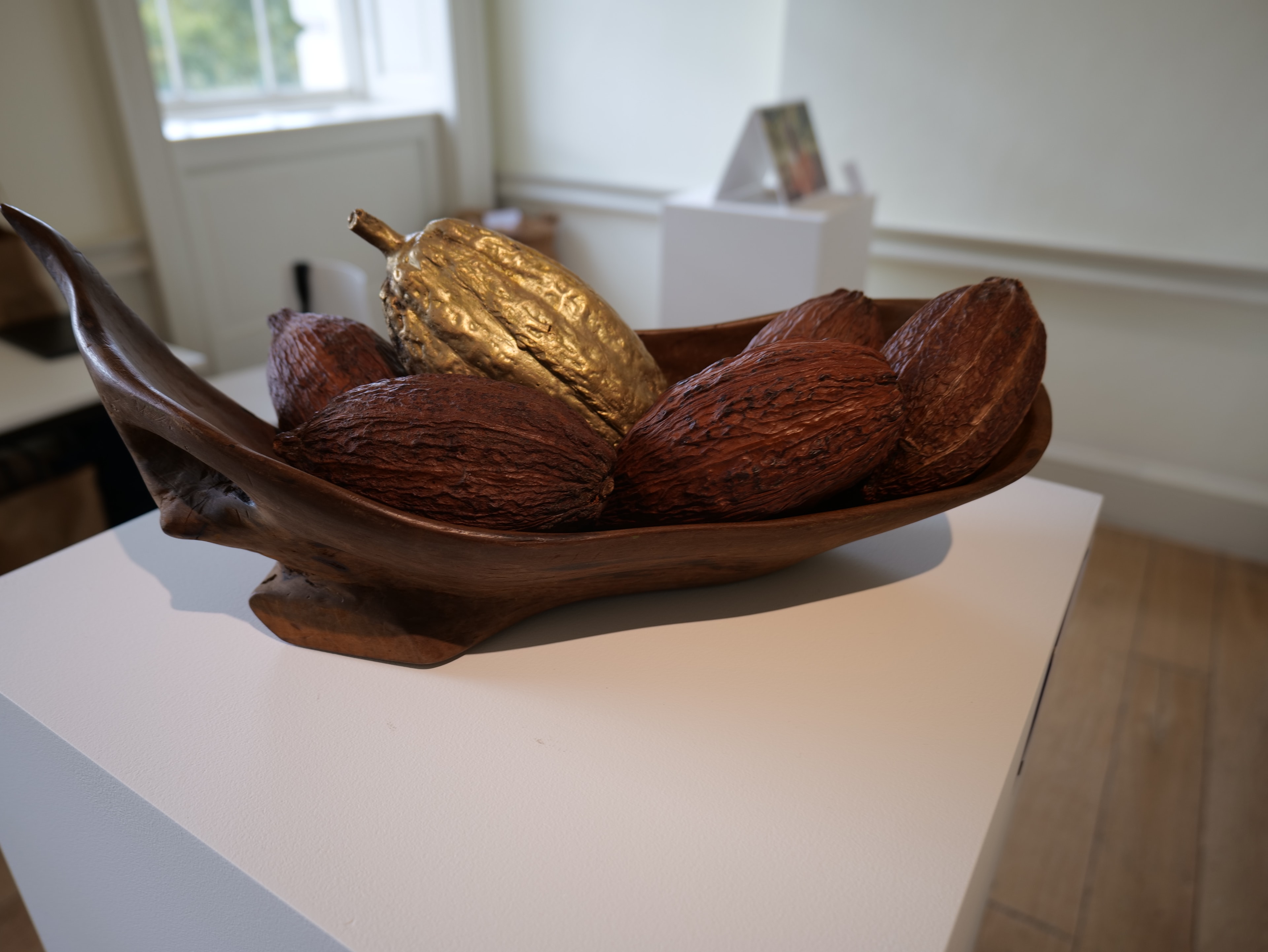
The pod, in brass.
BRASS PODS
ONE EDITION
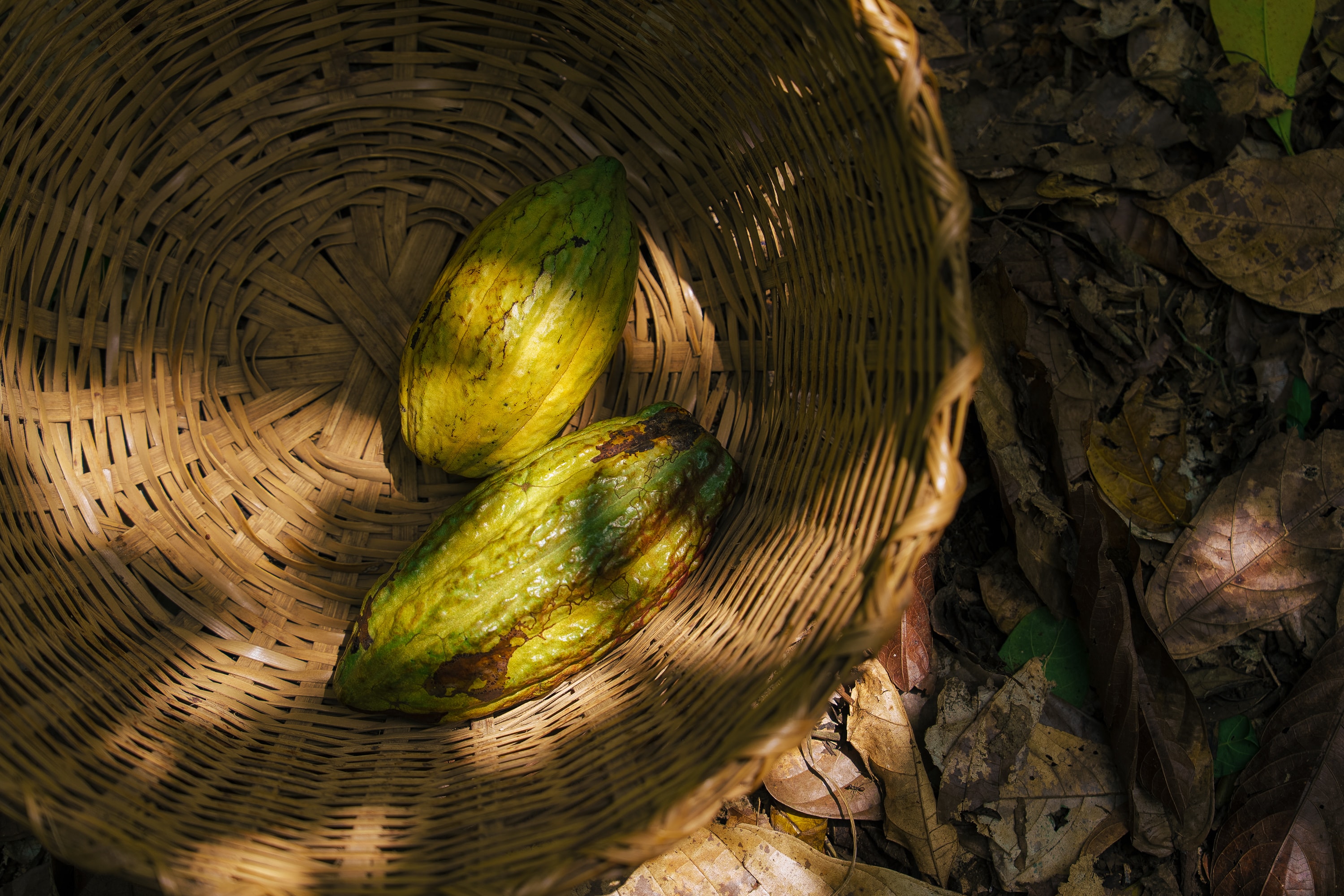
At the centre of the room is a cocoa pod cast in brass by Mr Emmanuel Fosu, a lost-wax master in Kumasi, using a craft Asante makers have practised for centuries. The model was a real pod from a family farm in Akyem Tafo, Eastern Region. It was cast in an edition of fifteen.
It is the couture in Commodity / Couture: the one part of this work you can take home.
Declare interestThe farmers
Read their words in English.
Tap to hear them in Twi.
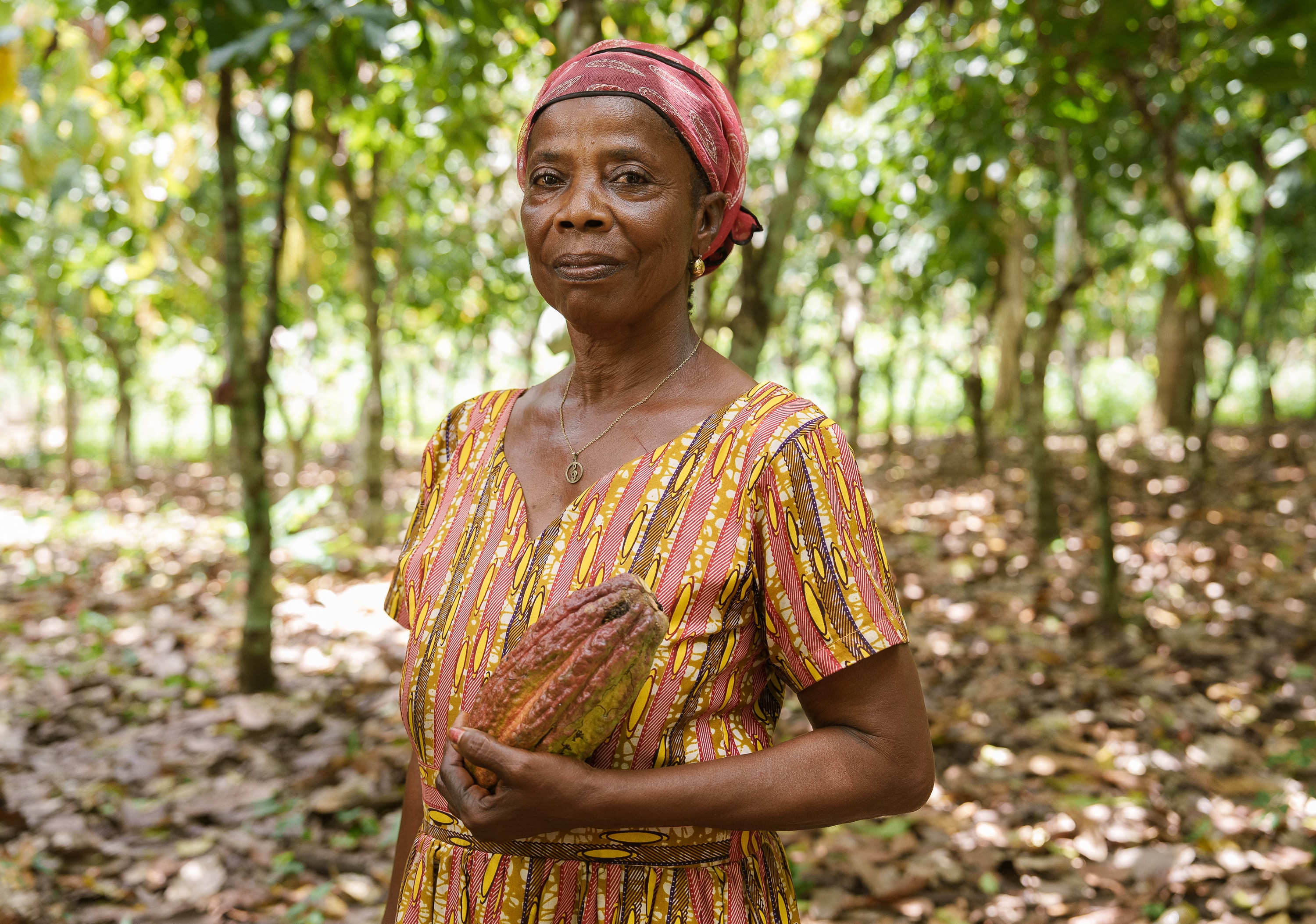
Charity Danso, Adumadum, Eastern Region, Ghana
“Cocoa farming is physically demanding, and hiring additional labour is essential to achieving a good harvest. The income from our produce supports many livelihoods, and the hard work that goes into cultivating cocoa should never be taken for granted.”
Photo: Alfred Quartey
Hear it in Twi
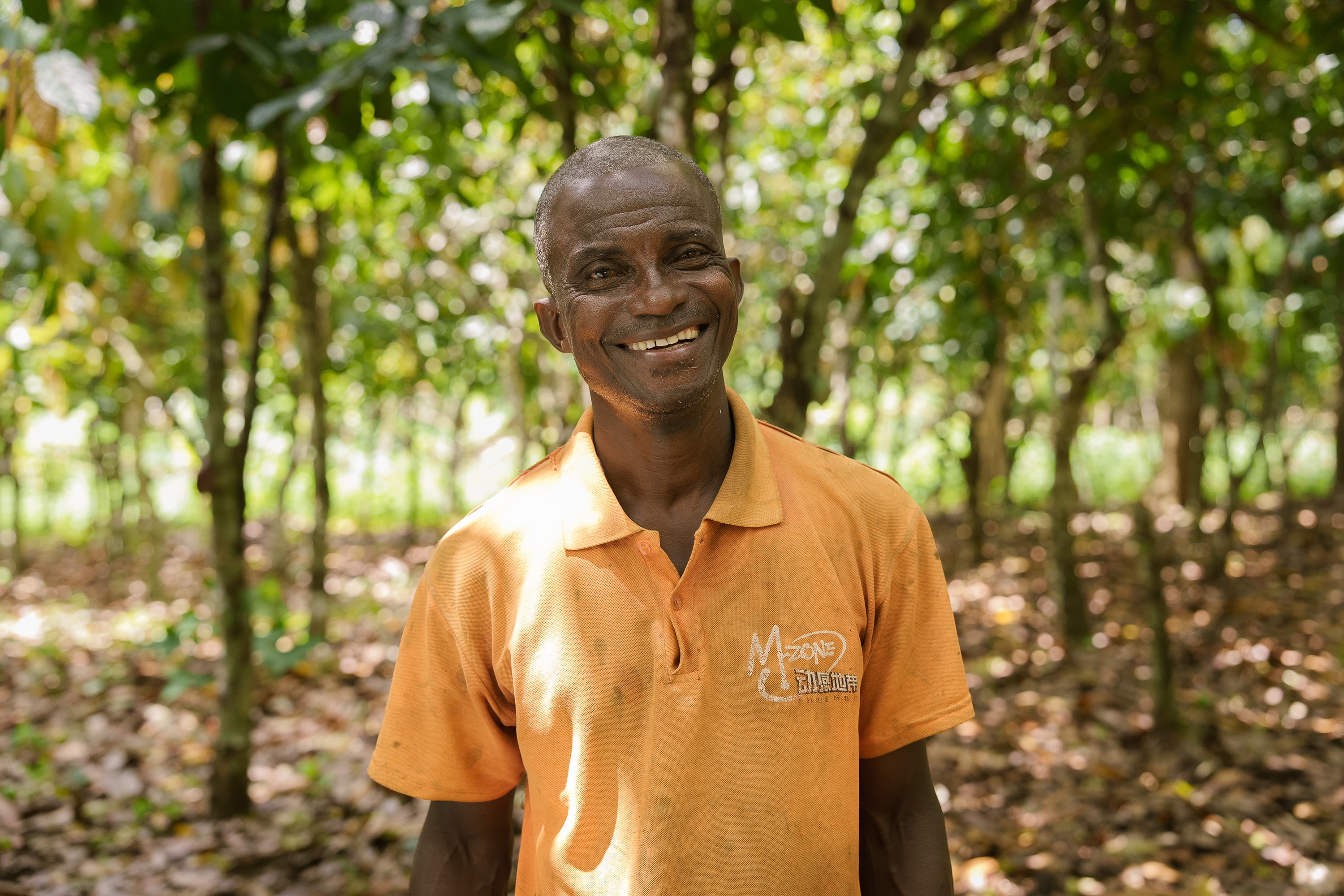
George Larbi Awuku, Adumadum, Eastern Region, Ghana
“I inherited this farm from my father. Maintaining it takes a lot of hard work, but I make sure to tend to it regularly. What I enjoy most is seeing the cocoa pods fully grown and ready for harvest. It’s a rewarding sight that makes all the hard work worthwhile.”
Photo: Alfred Quartey
Hear it in Twi
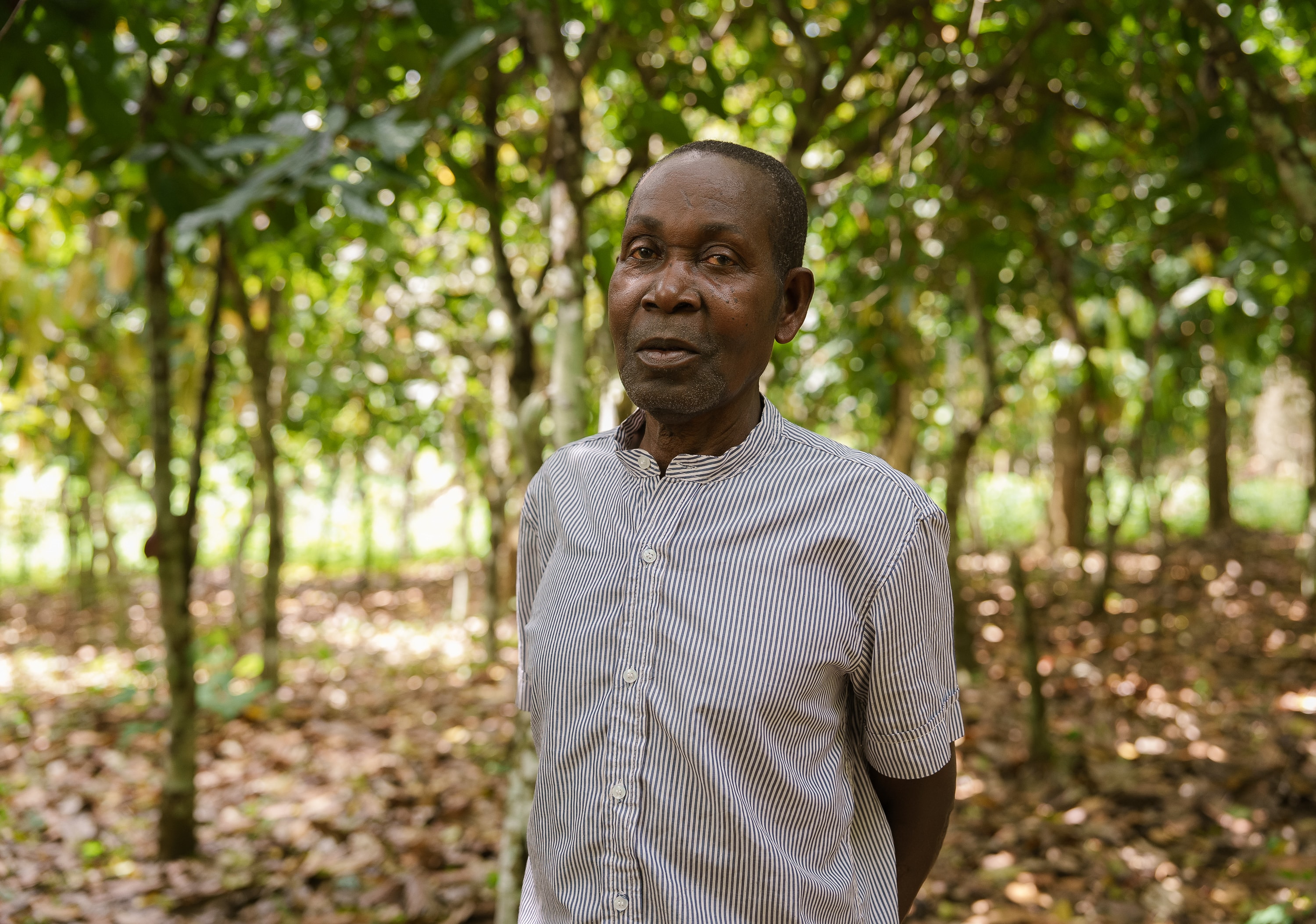
George Okyere, Adumadum, Eastern Region, Ghana
“I am a sharecropper, which means that 50 percent of the proceeds from the cocoa I harvest go to the landowner. What is most difficult about this work is the routine maintenance. I am passionate about this work because I am committed to producing the best quality beans.”
Photo: Alfred Quartey
Hear it in Twi
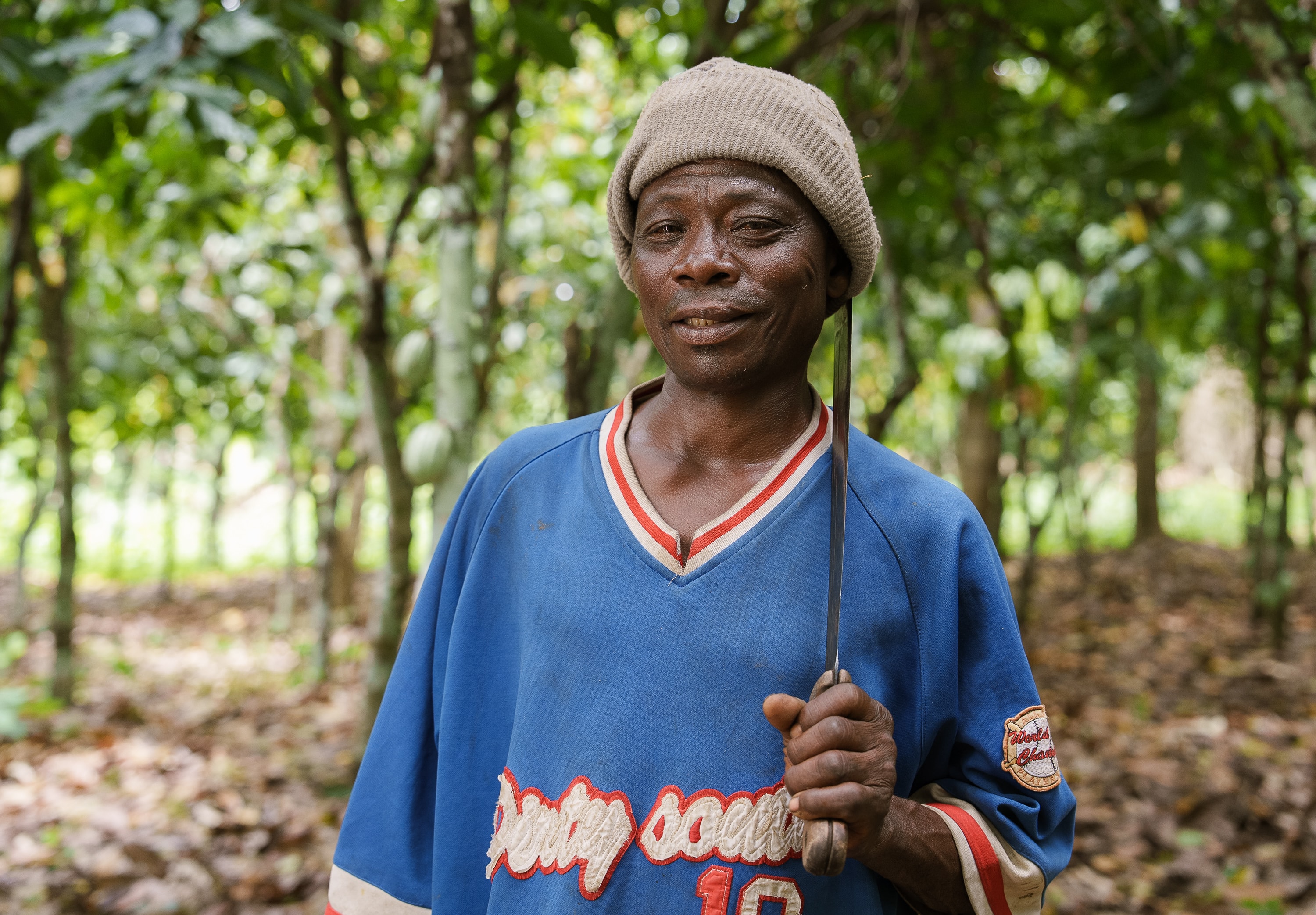
James K. Atta, Adumadum, Eastern Region, Ghana
“I believe eating chocolate is not particularly our culture. We’re merely producers. This is difficult work, but it contributes to my family’s subsistence. Earning a fairer share of the profits would certainly make a difference.”
Photo: Alfred Quartey
Hear it in Twi
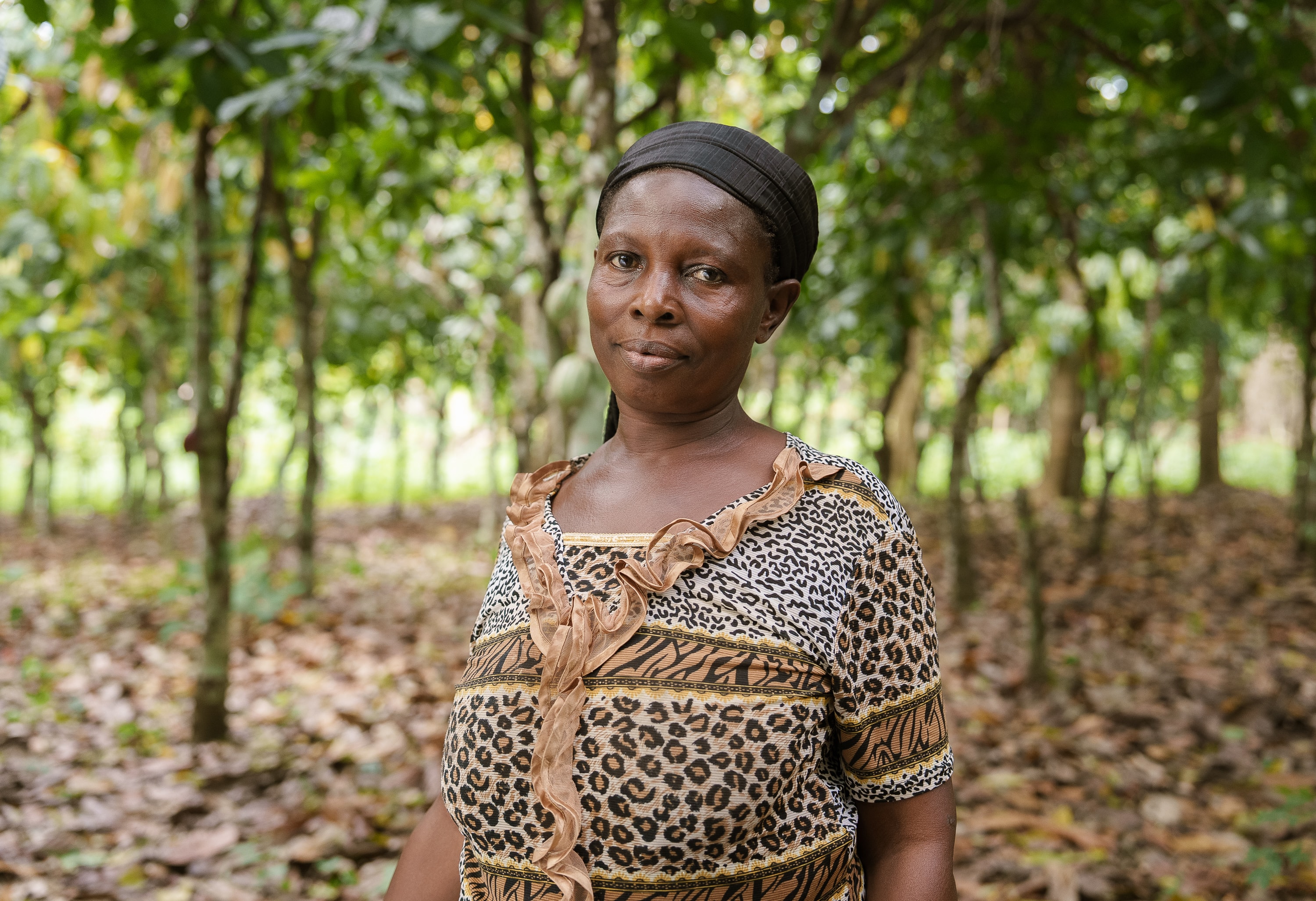
Agnes Tetteh, Adumadum, Eastern Region, Ghana
“I tend to the farm throughout the year. When harvest is made, I break the pods open to harvest the beans for fermentation. They are then sun dried. I get excited when I see ripe pods ready for harvest.”
Photo: Alfred Quartey
Hear it in Twi
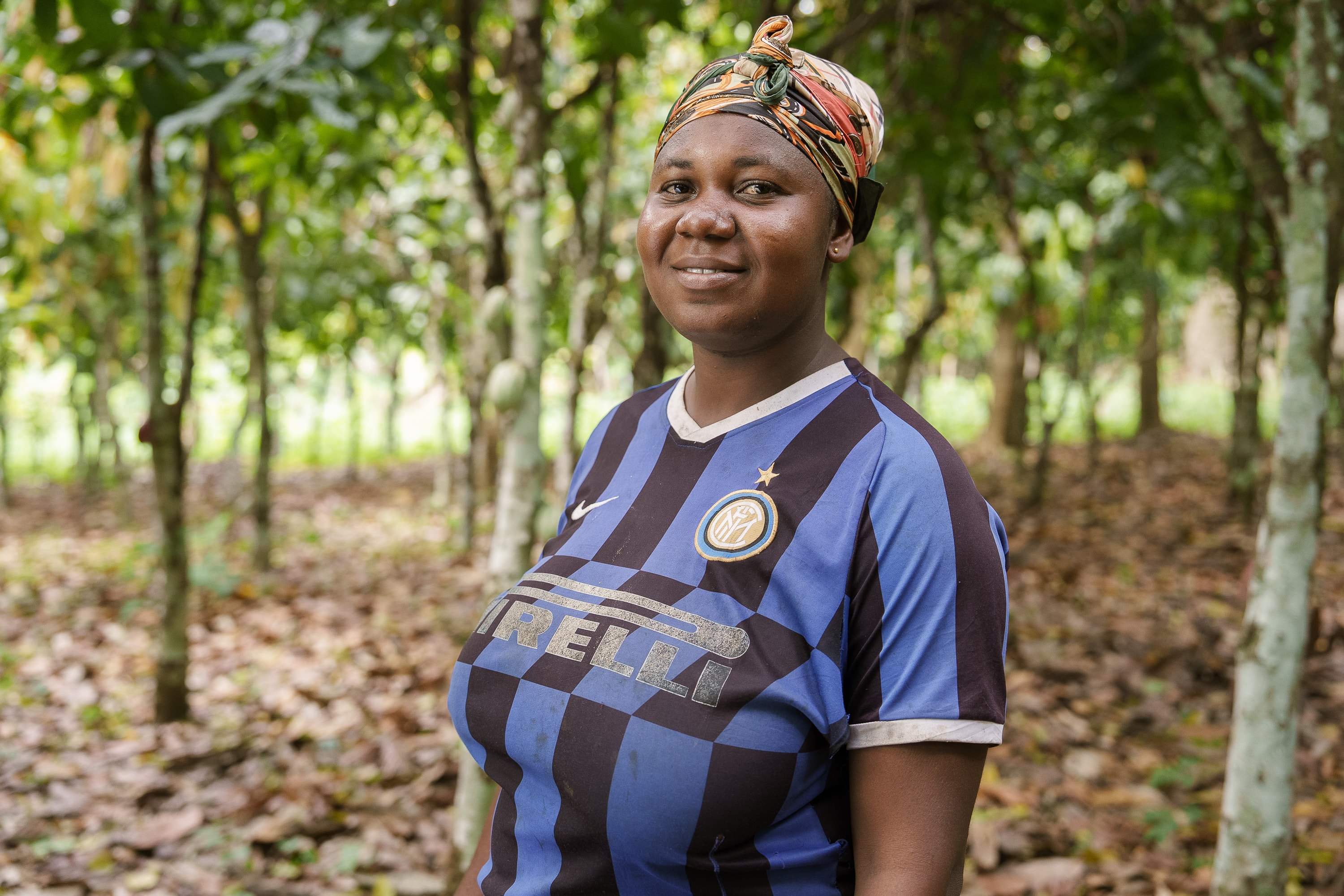
Abigail Okyere, Adumadum, Eastern Region, Ghana
“This is really difficult work, and we hope for fairer pay for producing the beans. We are weeding, breaking pods, drying and sorting under scorching temperatures, carrying heavy sacks, all before it gets processed into the final chocolate product. We want an increase in our pay so that we can do our work with joy and consistently produce quality cocoa.”
Photo: Alfred Quartey
Hear it in Twi
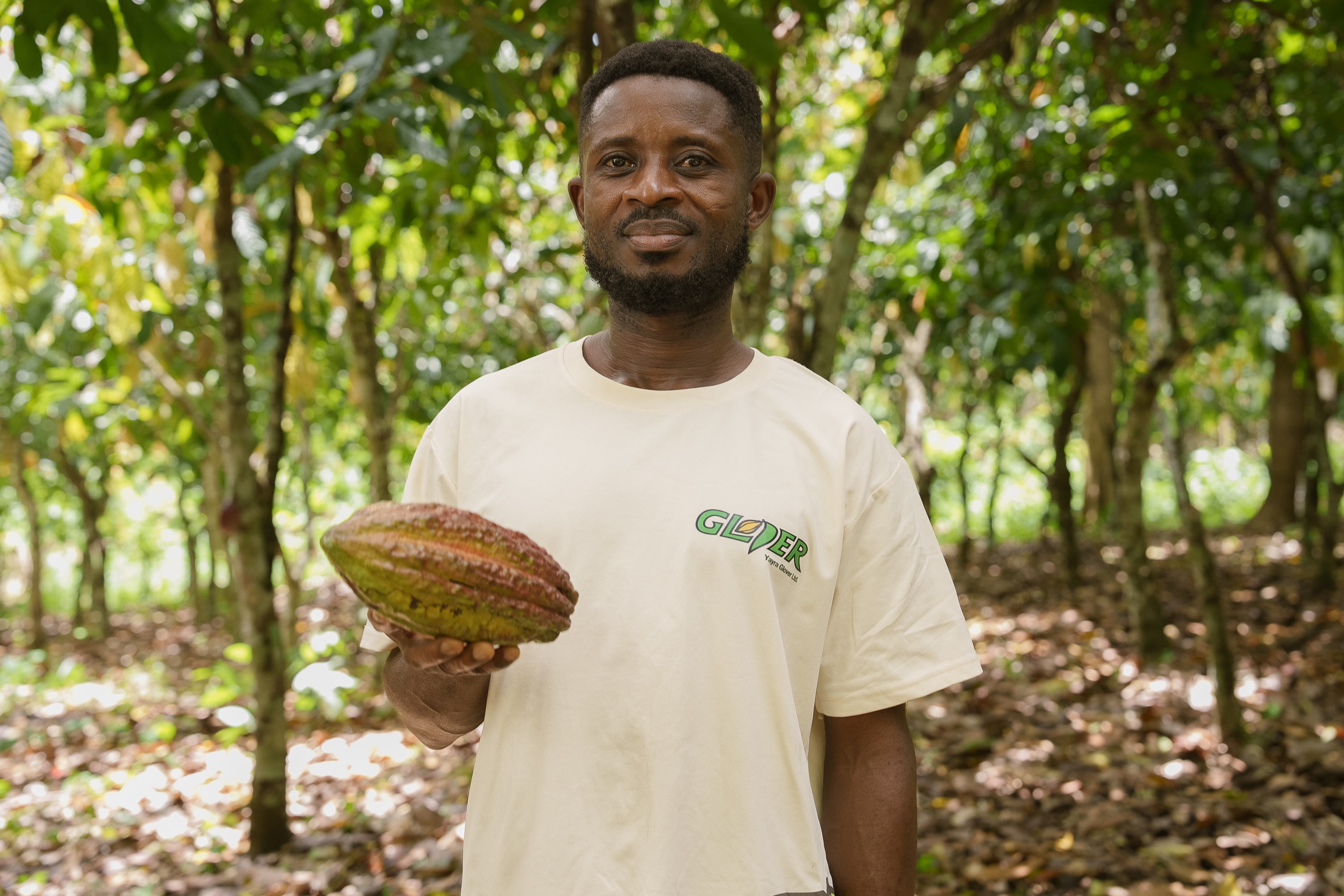
Samuel Akyea, Adumadum, Eastern Region, Ghana
“I am a sharecropper, and this is a worthwhile arrangement. Before a consumer gets chocolate to indulge in, the farmer puts in a lot of work. We first hire additional farm hands to help harvest the cocoa pods, scoop out the beans, dry the beans, sort them and have them transported. It’s a long, tiring process to get to the last stage of dried cocoa beans, which is processed for chocolate.”
Photo: Alfred Quartey
Hear it in Twi
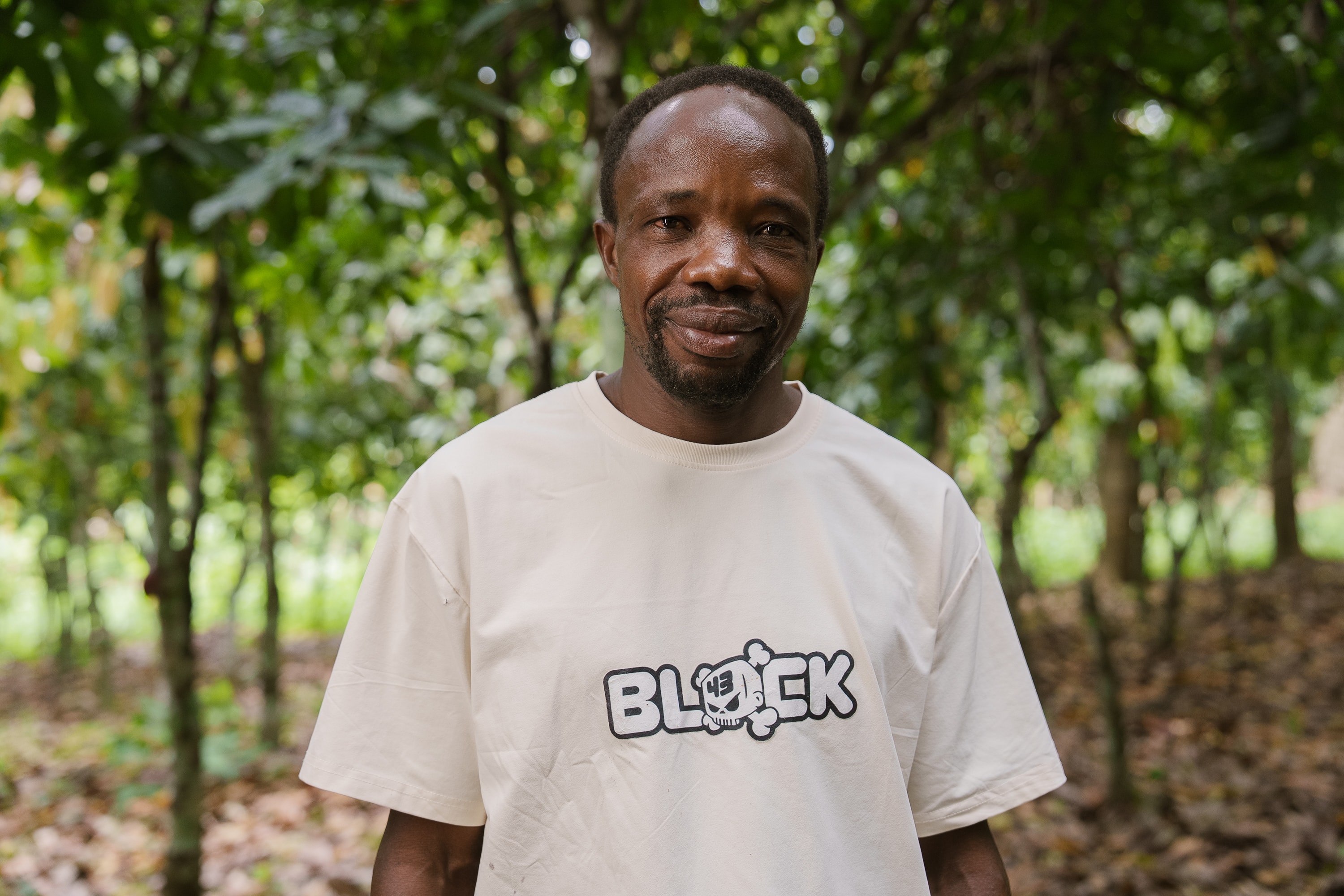
Kwadwo Atiso, Adumadum, Eastern Region, Ghana
“Everyday on the farm, I carry out maintenance routines to facilitate a good yield.”
Photo: Alfred Quartey
Hear it in Twi
Listen to the soundscape
About the
installation
BRASS PODS
ONE EDITION
Commodity / Couture is an installation by Selassie Atadika and the Midunu Institute, first shown at 1-54 Contemporary African Art Fair, Somerset House, London, in October 2026.
At its centre is a cocoa pod cast in brass by Mr Emmanuel Fosu, a lost-wax master in Kumasi, using a craft Asante makers have practiced for centuries. Around it, the farmers who grow the real thing. Ghana sends its cocoa out as a raw commodity. The work asks what it would take for more of its value to stay where it is grown.
Visitors leave letters to the farmers in a book that travels back to them after the fair.
The brass pod is cast in an edition of fifteen. To register interest, enquire about the edition.